
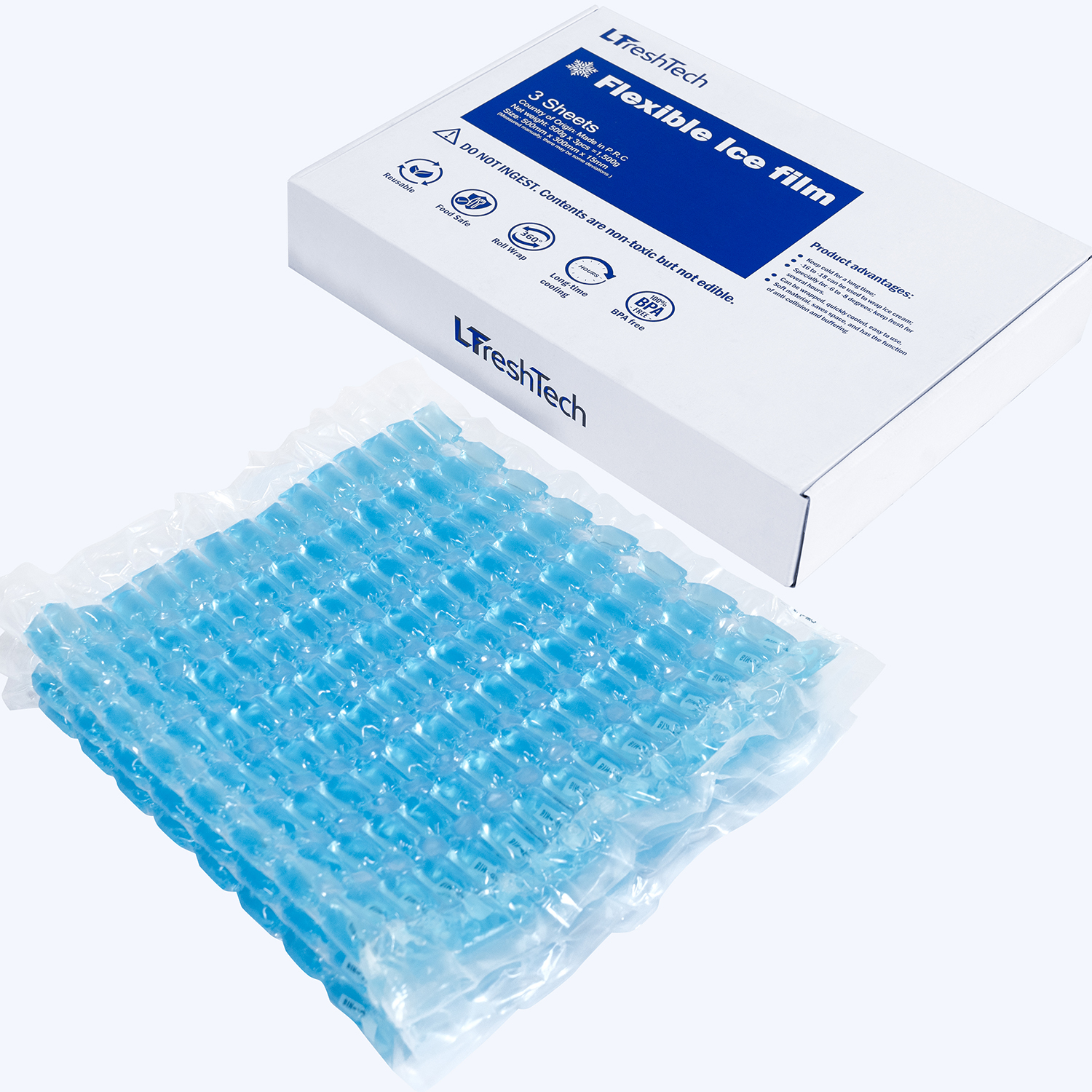
What Is Phase Change Flexible Ice Film?
LFreshTech phase change flexible ice film is a soft, foldable temperature-control sheet filled with a phase change medium. After the sheet is pre-cooled or pre-heated, the medium stores thermal energy and releases it as the surrounding temperature changes.
Unlike a rigid ice plate, the sheet can bend around food containers, bottles, delivery items, cooler interiors, or irregular packaging spaces. Its chambered construction helps the material remain distributed across the sheet and allows the product to continue functioning when one local chamber is damaged, subject to inspection and safe handling.
Five Practical Advantages
Flexible, close-fitting coverage
The sheet can fold, curve, or lie flat, helping reduce the air gaps commonly left by hard ice packs. Closer contact supports more even temperature control around the item.
Fast, even energy release
The PCM is designed to release stored cold or heat quickly and consistently. System performance can be configured for different holding periods by matching the sheet quantity, phase change point, container, and route.
Gentler product protection
A soft sheet can provide cushioning during transport and avoids the hard edges of conventional ice plates. This is useful for produce, pastries, meal delivery, and other items that can bruise or deform.
Food-contact material options
Food-grade material configurations are available for relevant applications. The coolant is not edible: stop using the sheet if leakage or serious damage is found, and do not consume any contents.
Designed for repeated use
Reusable sheets can lower per-use packaging cost and reduce dependence on disposable ice packs. Actual service life depends on the film specification, handling, cleaning, storage, and operating conditions.
Application Temperatures and Use Cases
There is no single temperature setting for every shipment. The phase change point, sheet quantity, insulated container, product load, ambient conditions, and delivery time should be selected as one system. The source material identifies the following application ranges as examples for solution design:
| Application | Example operating range | Packaging priority |
|---|---|---|
| Pastries | 1°C–5°C | Cushioning, fixation, moisture resistance |
| Vegetables and fruit | 3°C–13°C | Durable, moisture-resistant containers |
| Fresh products | 8°C–15°C | Controlled cooling without over-chilling |
| Chilled products | 0°C–5°C | Stable cold holding and leak resistance |
| Frozen products | -17°C to -13°C | Low-temperature sheet and insulation matching |
| Fresh meat | 1°C–15°C | Temperature range matched to product and route |
| Hot food and beverages | 40°C–50°C | Heat-resistant configuration and closed transport box |
Important: These are application examples, not a universal specification. Confirm the required temperature range, duration, payload, route, and compliance requirements before selecting a product.
How to Use Flexible Ice Film for Cooling
- Pre-cool the sheet. The source guide recommends a -16°C to -22°C freezer. A single sheet may require approximately 4–8 hours; stacked sheets or a full container can require longer.
- Position it around the load. Wrap the item for closer coverage or lay the sheet flat inside an insulated box or cooler bag.
- Adjust the quantity. Larger containers, heavier payloads, longer routes, or warmer ambient temperatures generally require more stored energy.
- Validate the complete pack-out. Run a time-and-temperature test under realistic route conditions before commercial use.
How to Use It for Warm Holding
Compatible heat-resistant configurations can also be used for warm food or beverage delivery. The source guide recommends pre-heating in 60°C–70°C hot water in an open container for approximately 5–10 seconds per sheet, then placing the sheet around the load or inside a suitable food transport container.
Do not microwave the sheet
Use only the heating method and temperature range specified for the selected product. Never microwave flexible ice film, and do not use a cooling-only specification for warm holding.
Who Is It For?
For business buyers, flexible PCM sheets can support fresh grocery delivery, restaurant and meal delivery, flower delivery, bakery distribution, seafood and meat logistics, and custom cold-chain packaging. The value comes from combining a reusable temperature-control component with a pack-out designed for the actual product and route.
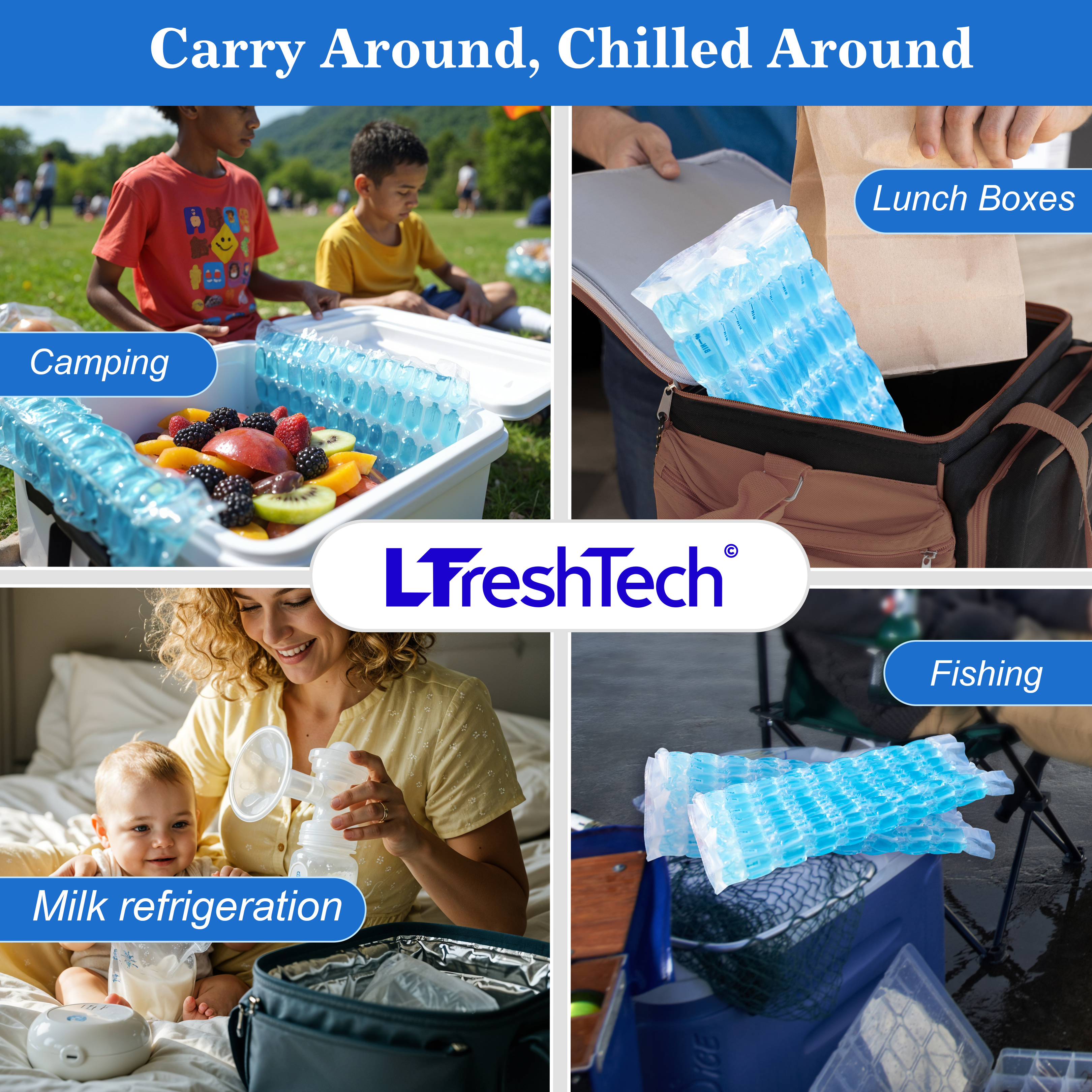
For consumers, the same flexible format can fit cooler bags, picnics, camping trips, beverages, lunch boxes, breast milk transport, and temporary cold-compress use. Always choose a product intended for the specific application and follow the supplied care instructions.
What Buyers Should Confirm Before Ordering
- Target product temperature and acceptable excursion range
- Required holding time and expected ambient conditions
- Inner box dimensions, payload, and available packing space
- Cooling-only or compatible warm-holding requirements
- Film strength, puncture resistance, sealing, and food-contact needs
- Cleaning process, reuse expectations, order quantity, and custom sizing
A controlled pack-out test is the most reliable way to determine sheet type and quantity. LFreshTech can help retail and wholesale buyers match the flexible ice film, phase change point, and insulated packaging to the intended use.